Rogers tv Community News
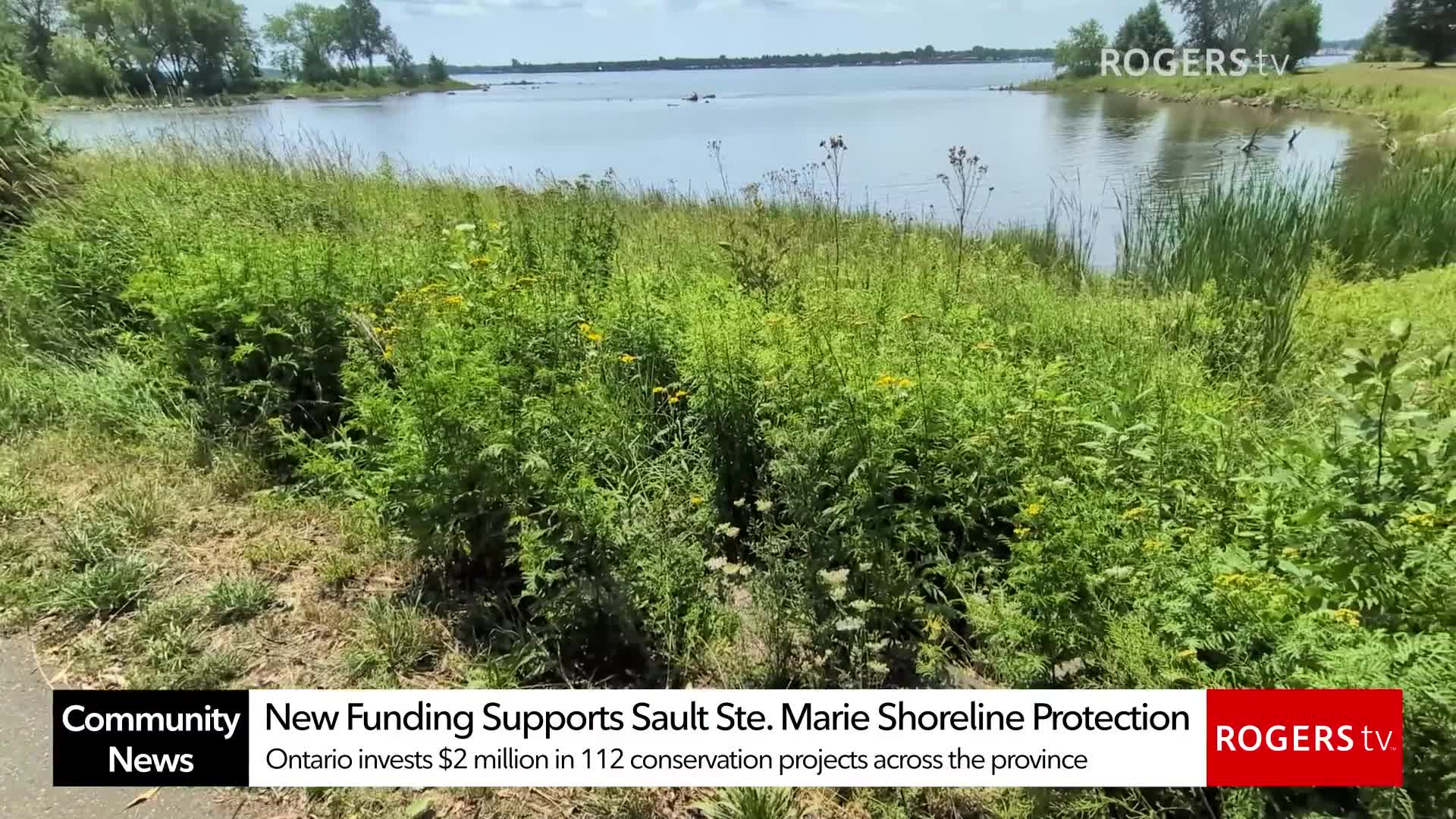
New Funding Supports Sault Ste. Marie Shoreline Protection
Himalayan balsam is one of the fastest-spreading invasive plants in Canada, and its impact is increasingly visible across Sault Ste. Marie.
Originally introduced as a garden ornamental, the species now dominates riverbanks, wetlands, and shaded trail systems throughout the region. Its rapid growth allows it to reach heights of 1.5 to 2 metres, forming dense stands that crowd out native vegetation and reduce biodiversity.
One of the plant’s most aggressive traits is its seed dispersal. Mature pods build internal pressure and burst when touched, launching seeds up to five metres away. A single plant can produce hundreds of seeds per season, enabling Himalayan balsam to quickly colonize new areas and return year after year if not removed before seed set.
The ecological impacts are significant. When balsam outcompetes native plants, it leaves riverbanks exposed after it dies back in late summer. Without deep-rooted native species to stabilize the soil, erosion increases, water quality declines, and habitat for fish, insects, and pollinators becomes disrupted. Studies across Canada and the UK have linked Himalayan balsam infestations to higher sedimentation levels and reduced diversity of riparian plant communities.
Sault Ste. Marie organizations — including the Invasive Species Centre, Clean North, and local stewardship groups — have been conducting repeated removal efforts throughout the summer. Community pulls often remove thousands of plants in a single session, with volunteers targeting hotspots along Fort Creek, Clark Creek, and other waterways. Funding from programs such as the Invasive Species Awareness Fund (ISAF) supports training, monitoring, and restoration work, helping crews return to the same sites over multiple years.